What Is Reiki? A Grounded Guide to Your First Session
A plain-English look at what Reiki is, what a first session actually feels like, and what it isn’t — from the practice room at Atlantean Healing Arts in Melbourne, Florida.
Reiki is a gentle, energy-based practice in which a trained practitioner rests their hands lightly on — or just above — your body to help you drop into a deep state of rest. You stay fully clothed, lying on a comfortable table, while the practitioner moves slowly through a sequence of hand positions from your head to your feet. Most people describe it as the physical equivalent of a long, slow exhale. There’s nothing to perform and nothing to figure out; your only job is to lie there and let your system settle.
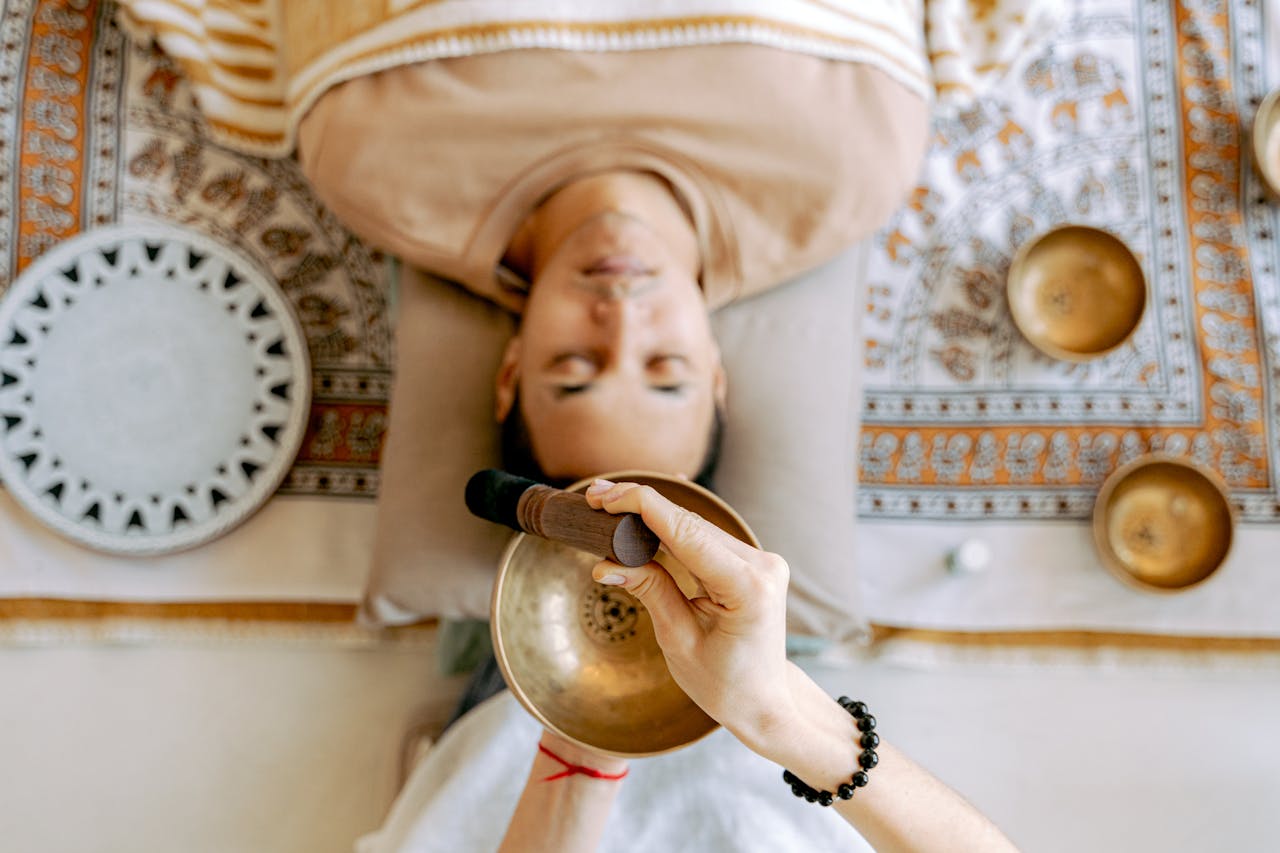
If you’ve never tried it, picture the stillness of a good meditation crossed with the ease of a Sunday-afternoon nap. No oils, no pressure, no talking required — just quiet, focused attention and an unhurried hour with nothing asked of you.
What Reiki actually is
The word comes from two Japanese terms — rei, often translated as “universal” or “spiritual,” and ki, meaning life energy (the same idea as chi in Chinese practice or prana in yoga). Together they point to the subtle, animating force that traditions around the world have described for centuries. The modern system was developed in early-twentieth-century Japan by Mikao Usui and has been passed along ever since, teacher to student, hand to hand.
In a session, the practitioner works as a channel rather than the source. They aren’t forcing their own energy into you or diagnosing anything — they’re holding a calm, attentive presence and letting that life energy move where it’s drawn. The contact is feather-light, and much of the time the hands simply hover an inch or two above the body instead of pressing on it. That’s part of why Reiki can be offered to people who are sore, tired, recovering, or who would rather not be handled at all.
What your first session actually feels like
You’ll arrive, talk briefly about what brings you in, then settle back on a padded table — shoes off, fully dressed, usually under a light blanket. The quiet treatment space tends to be dimly lit, often with soft music playing. From there the practitioner works slowly through a series of positions, resting their hands on or above your head, shoulders, torso, and legs while you breathe and let go. Sessions generally run about an hour, though the exact length varies.
What you might notice
Sensations differ a lot from one person to the next, and even from one visit to the next. Common ones include a gentle warmth or coolness under the hands, a pleasant heaviness, faint tingling, muscles unclenching that you didn’t know were tight, or that floaty, half-asleep drift right before you doze off. Some people get quietly emotional. Some fall asleep. Some feel very little the first time and much more on the next. All of it is normal — there is no “right” way to experience Reiki, and what you feel (or don’t) isn’t a measure of whether it’s doing anything.
What Reiki is not
This part is worth being clear about. Reiki is not massage — there’s no kneading, no oils, and no working of muscle or tissue. It isn’t chiropractic, physical therapy, or bodywork of any kind. It also isn’t a medical treatment, and it is not a substitute for one. A session doesn’t diagnose conditions and makes no promise to cure or treat disease. The honest way to hold it: Reiki is a form of deep rest and energetic support that sits alongside your regular healthcare, never in place of it. If something is going on with your health, keep seeing your doctor — Reiki is glad to keep good company.
Who Reiki is for
Because it asks nothing of you but a willingness to lie down and receive, Reiki is unusually accessible. People come in stretched thin by stress, worn down by a hard stretch of life, curious about energy work, or simply wanting one hour where nothing is required of them. It often lands well for those who find their minds too busy for ordinary meditation, since here someone else holds the space and you get to be led. You don’t need to be spiritual, flexible, experienced, or “good at relaxing.” You just need to show up.
How to learn Reiki for yourself
Reiki isn’t reserved for practitioners — it’s a skill you can learn and use on yourself, your family, and your friends. Training moves through levels. Reiki I is the hands-on foundation, where you receive your first attunement and learn to work with the energy for self-care and for others. Reiki II goes deeper, introducing the traditional symbols and the practice of sending Reiki across distance. Many people begin by booking a session with Dr. Duncan Bowen simply to feel what it is, then decide to train once they’ve experienced it from the table.
Key takeaways
- Reiki is a gentle energy practice done with light touch, or with the hands held just above a fully clothed body.
- A session is about deep rest — expect stillness, warmth, and calm, not manipulation or effort.
- It is not massage and not a medical treatment; it complements your healthcare rather than replacing it.
- What you feel varies from person to person, and sensing very little (or drifting off) is completely normal.
- You can receive Reiki as a client or learn to practice it yourself, beginning with Reiki I.
Reiki, Answered
Is Reiki safe?
Yes. Reiki is non-invasive and gentle — no pressure, no substances, and no manipulation of the body, so there’s very little that can go wrong. You stay fully clothed and in control the entire time, and you can ask to pause or stop at any point. It’s meant to sit comfortably alongside whatever medical care you already receive, never to replace it.
Do I have to believe in it for it to work?
No. You don’t need faith and you don’t need to understand the mechanism. Plenty of first-timers walk in skeptical and simply notice how settled they feel afterward. You’re welcome to stay curious, stay doubtful, and experience it on its own terms — Reiki doesn’t ask you to believe anything, only to rest.
Is Reiki religious?
No. Reiki isn’t a religion and doesn’t belong to one — there’s no doctrine to accept and nothing to convert to. Although it works with the idea of life-force energy, people of every faith and of no faith both practice and receive it. You’re free to fit it into your own beliefs however you like, or to hold none in particular.
Start With a Free 20-Minute Discovery Call
Curious whether Reiki is your right next step? Talk it through with Dr. Bowen — where you are, what you’re seeking, and how this path fits your life. Free, relaxed, no commitment.

Transformative spiritual healing rooted in ancient teachings and modern practice. Guided by Dr. Duncan Bowen, PhD — Melbourne, Florida.
Contact
- 1600 Sarno Road, Suite 216
Melbourne, Florida - drduncanbowen@gmail.com
- (321) 543-8882